Path of Emotions ⛰️
A pixel art typing game for crisis line workers! Building emotional vocabulary and typing fluency through seven progressively challenging environments, with feelings words falling from the sky.
Why this project found me
Years before I was a designer, I was a volunteer at a crisis line texting service. Following a series of trainings, I spent hours typing responses to people in acute distress, learning to choose words carefully, quickly, and with intention. That experience gave me important context. However, I never had to fill out extensive documentation after every interaction, just a few questions.
Later, I worked as a houseless camp case manager, which was a role that demanded emotional precision, often in chaotic conditions. The workers around me had to document and emotionally regulate all at once. I watched brilliant, caring people burn out not from lack of empathy, but from systems that gave them no room to breathe or practice.
When my internship at ResolveX, a mental health company with documentation software for crisis center workers, offered me this opportunity to make a game, I was incredibly excited to build. Path of Emotions started as an answer to a very personal design question: what does it look like to practice both emotional vocabulary and typing speed in a space that doesn't feel clinical?
"What if the same act of typing that fills out crisis documentation could also be a moment of calm and learning?"
-> The question that started this projectWho we're designing for
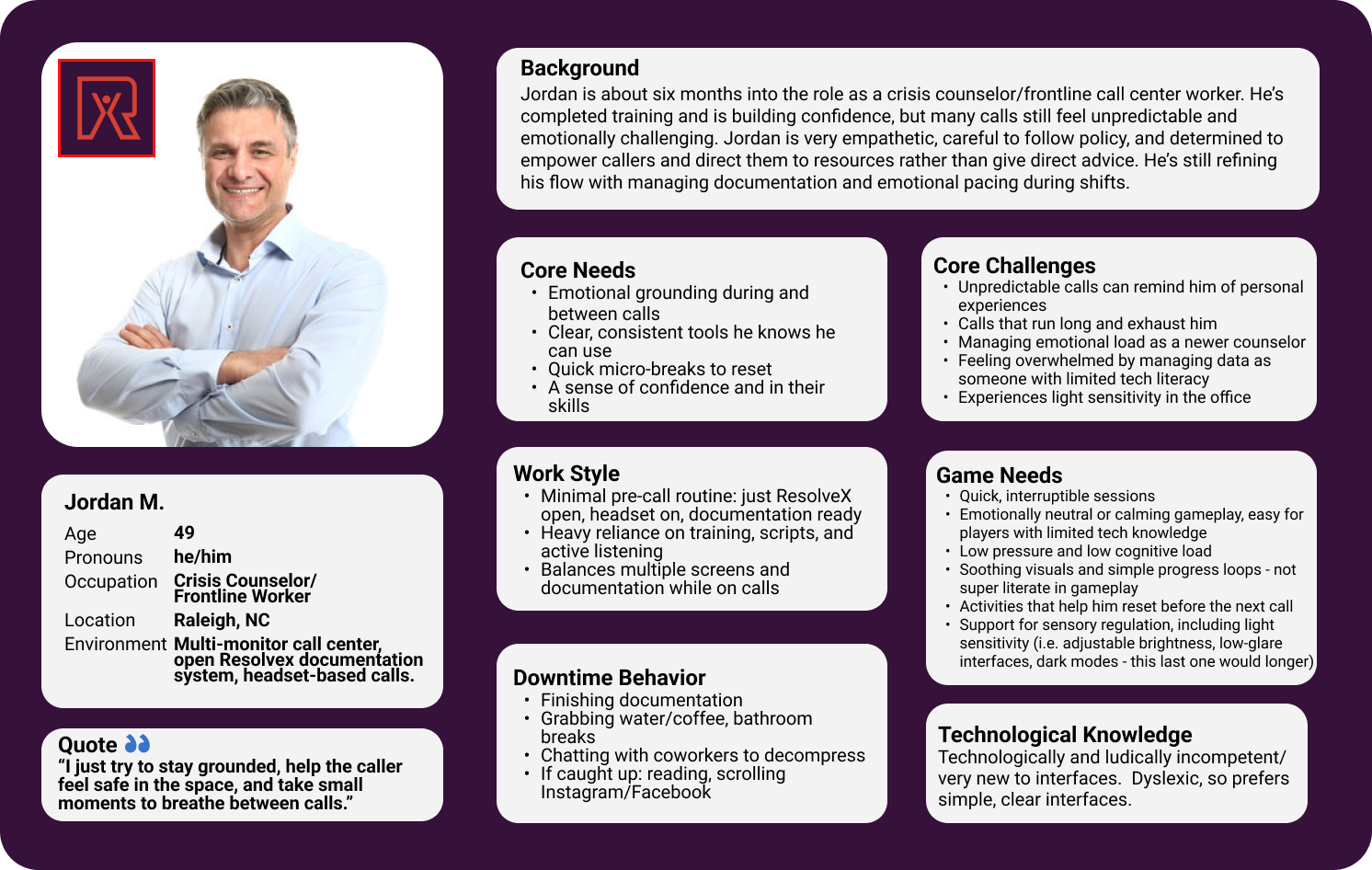
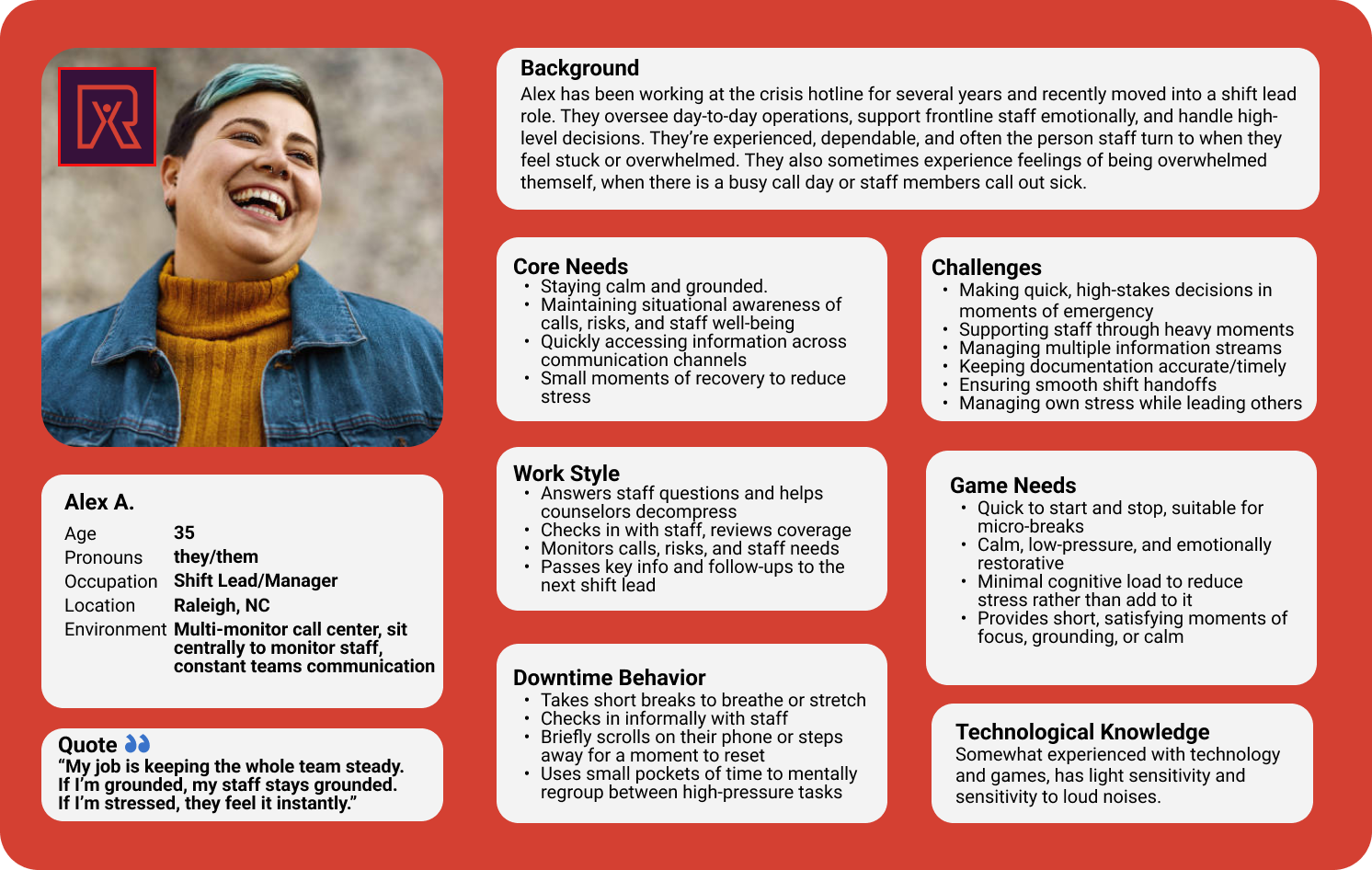
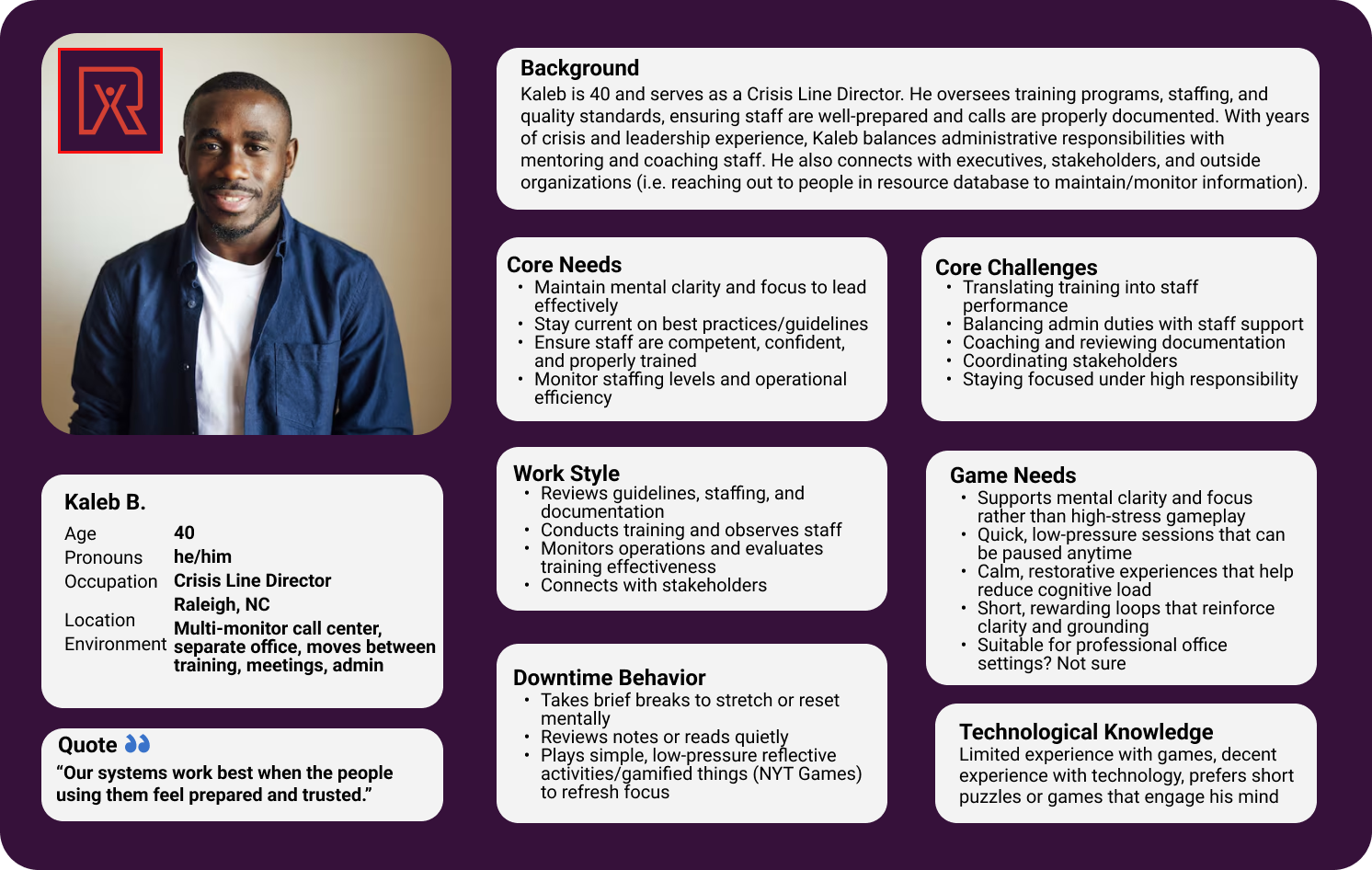
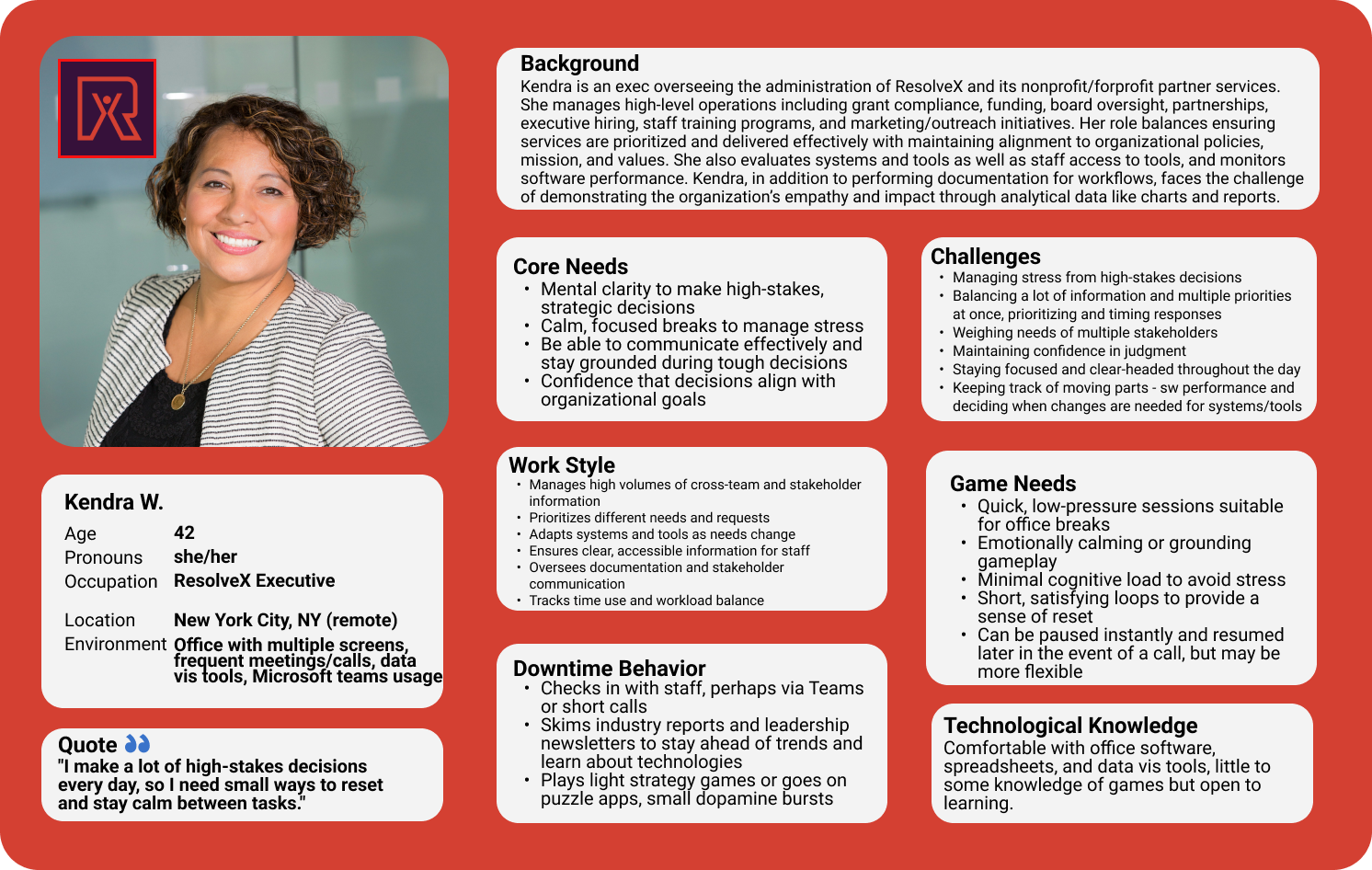
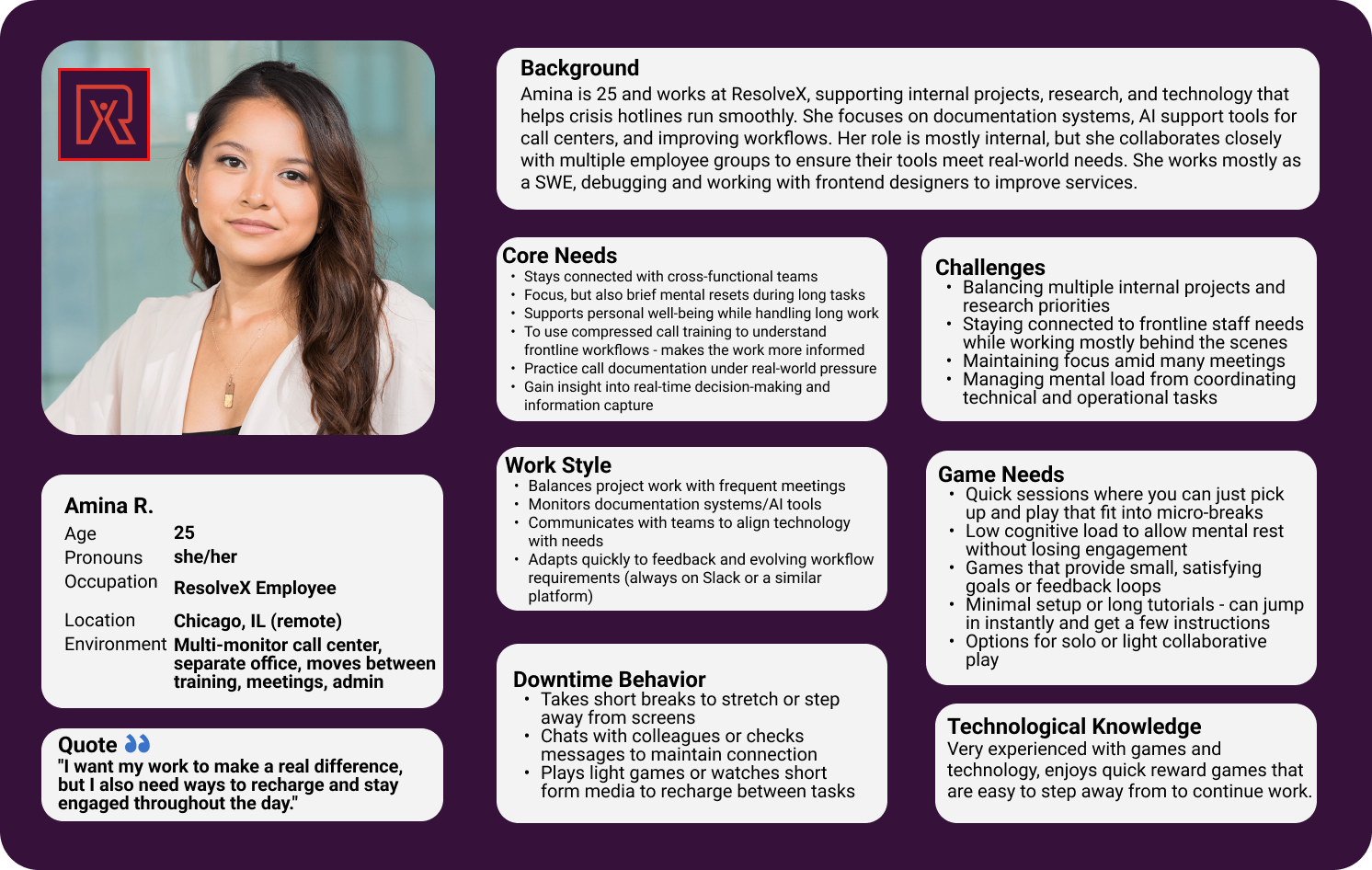
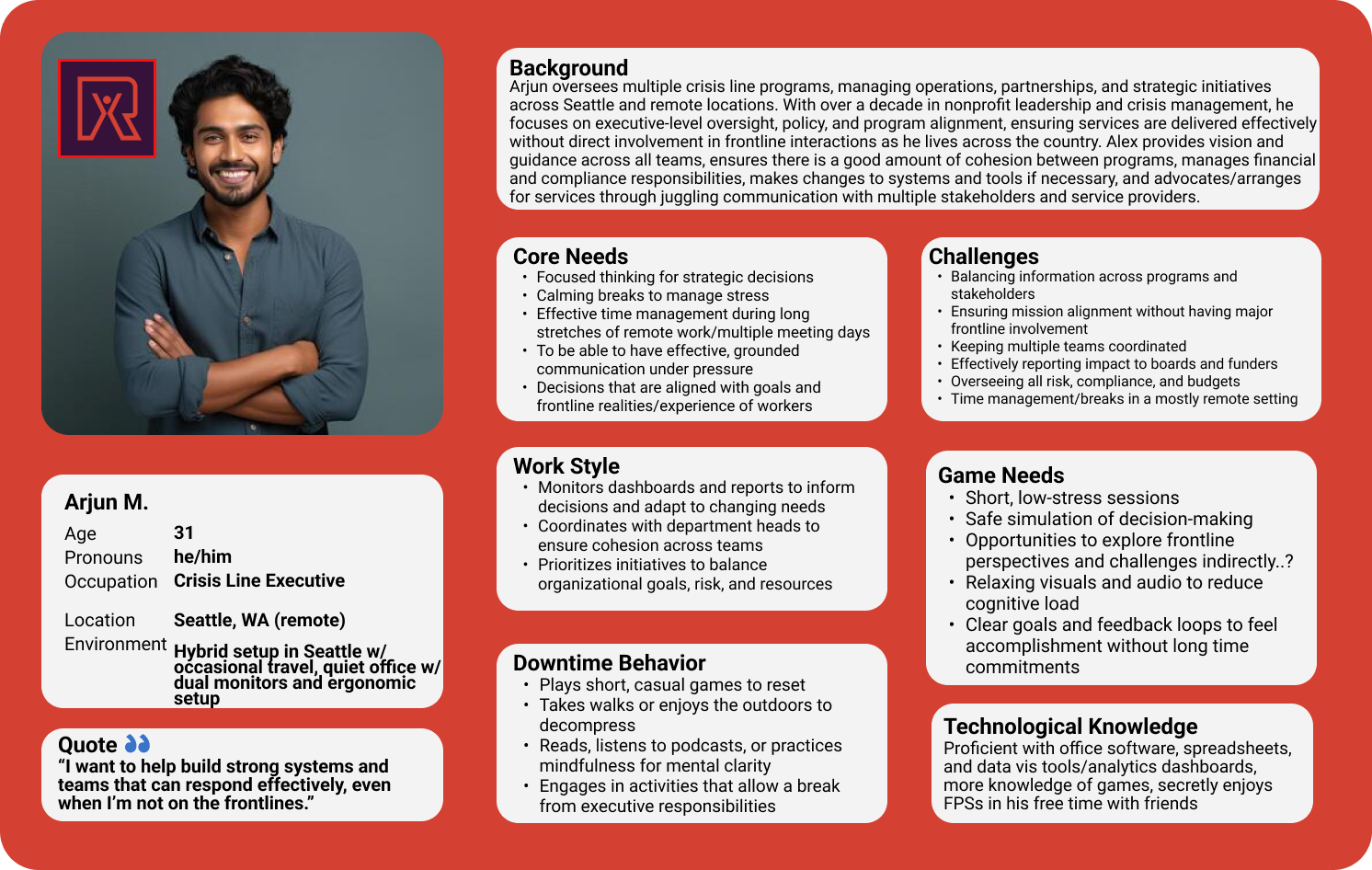
Before deciding what time of game to create, I developed six user personas representing the range of workers in this problem space who might use Path of Emotions, from new frontline employees finding their footing to seasoned executives managing burnout. Each persona shaped a different aspect of the game: pacing, vocabulary difficulty, visual tone, and accessibility needs.
The feelings wheel
The vocabulary for Path of Emotions is grounded in the feelings wheel, which is a structured map of emotions language used widely in crisis support training. It organizes emotions from broad states at the center outward to nuanced, layered feeling-words at the edges.
This became the backbone of the word bank and the game's difficulty progression. Words closest to the center of the wheel such as "sad," "angry," and "afraid" appear in early levels. As the game progresses, the words move outward: "bereft," "ambivalent," "despondent," "tender." The mountain climbs as the vocabulary deepens.
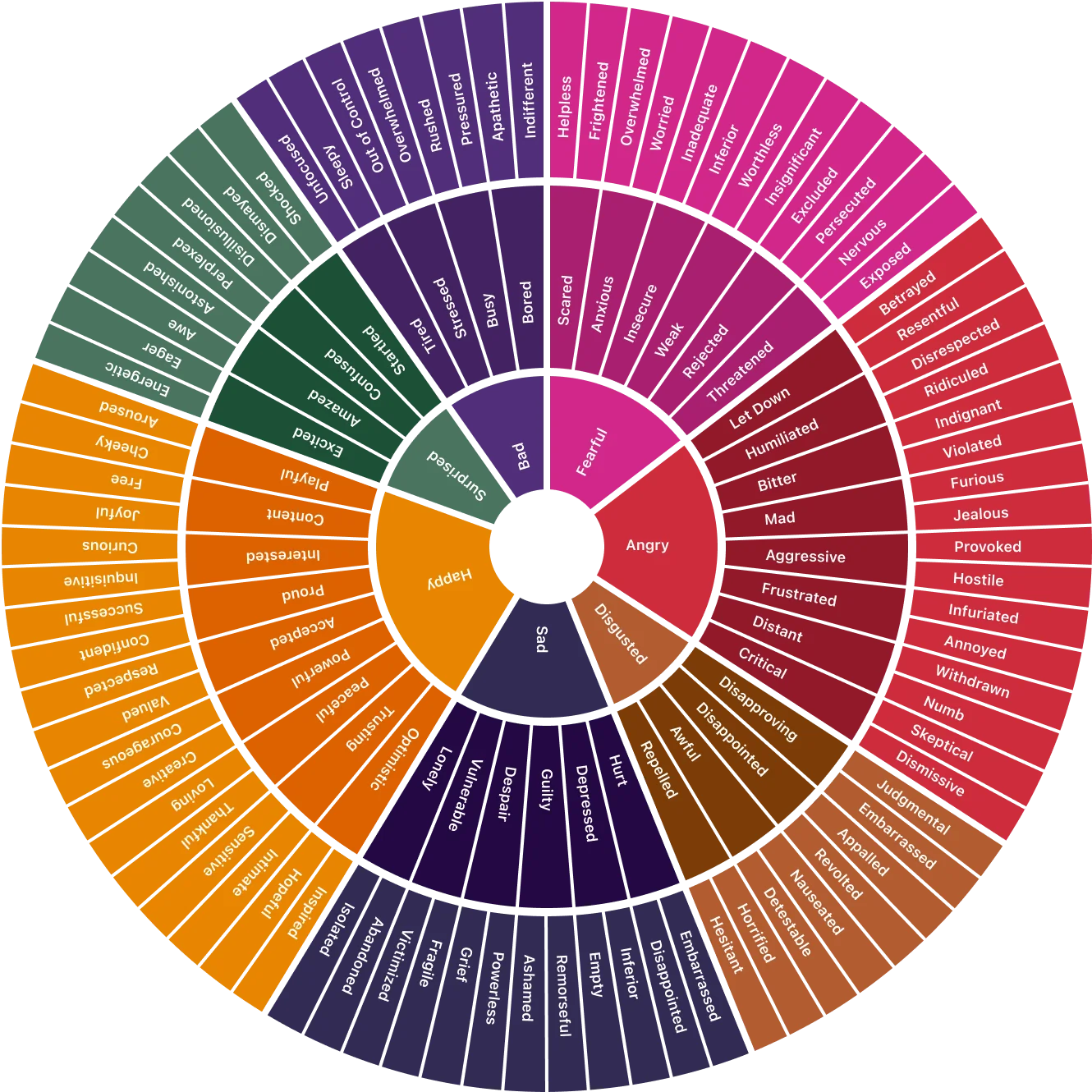
The feelings wheel: foundation of the word bank and difficulty curve
A sample of feeling words used in the game
How Path of Emotions works
Crisis line workers spend significant time typing during and after calls, documenting, responding, logging. Typing fluency directly affects how present they can be on a call. Path of Emotions builds that fluency in a way that also familiarizes workers with the exact emotional vocabulary they'll use on the line.
The mechanic is simple: feeling words fall from the top of the screen. Players type each word and press enter to clear it and move onto the next terms before it reaches the bottom. Words are highlighted as the current target when the player hits enter, so there's no clicking needed. Each level gets gradually faster, increasing the typing demand over time. There are intermediate levels with paragraphs to type, testing an individual's ability to type full sentences.
The dual purpose is intentional. Faster typing means more practice with typing under pressure. Familiarity with emotional vocabulary means richer, more precise responses to callers. Both skills are practiced in the same breath, inside a calming pixel art environment that is not in a documentation context.
Seven environments
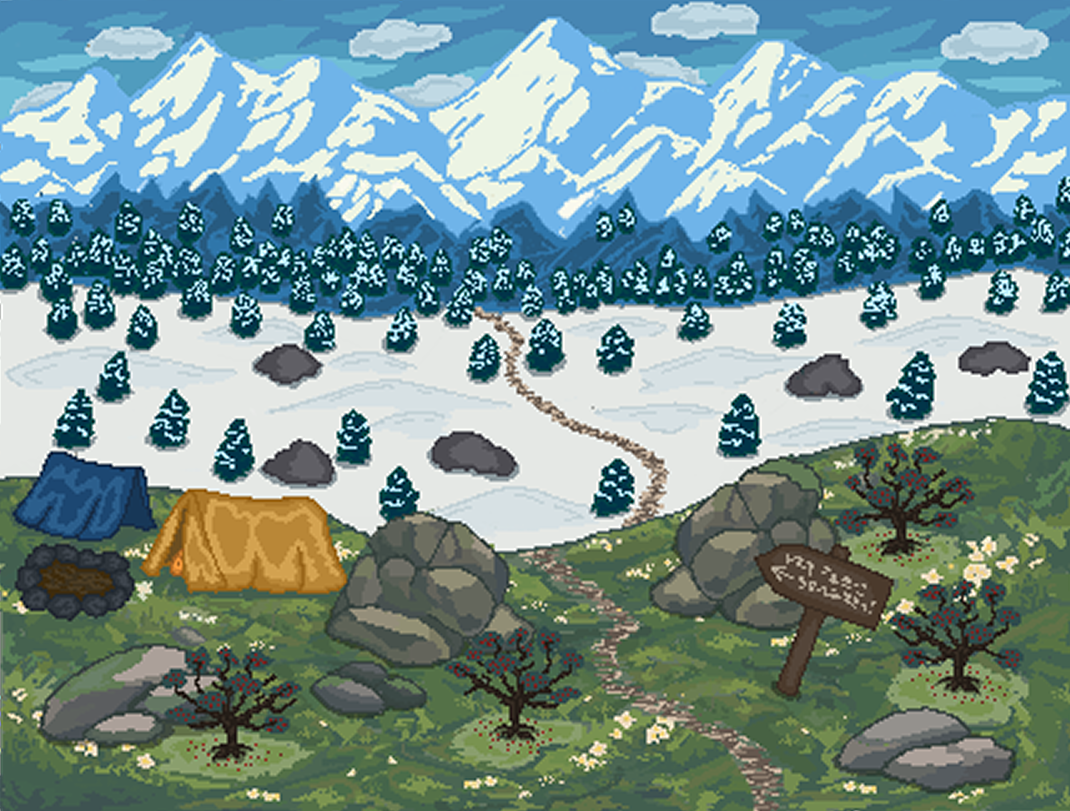
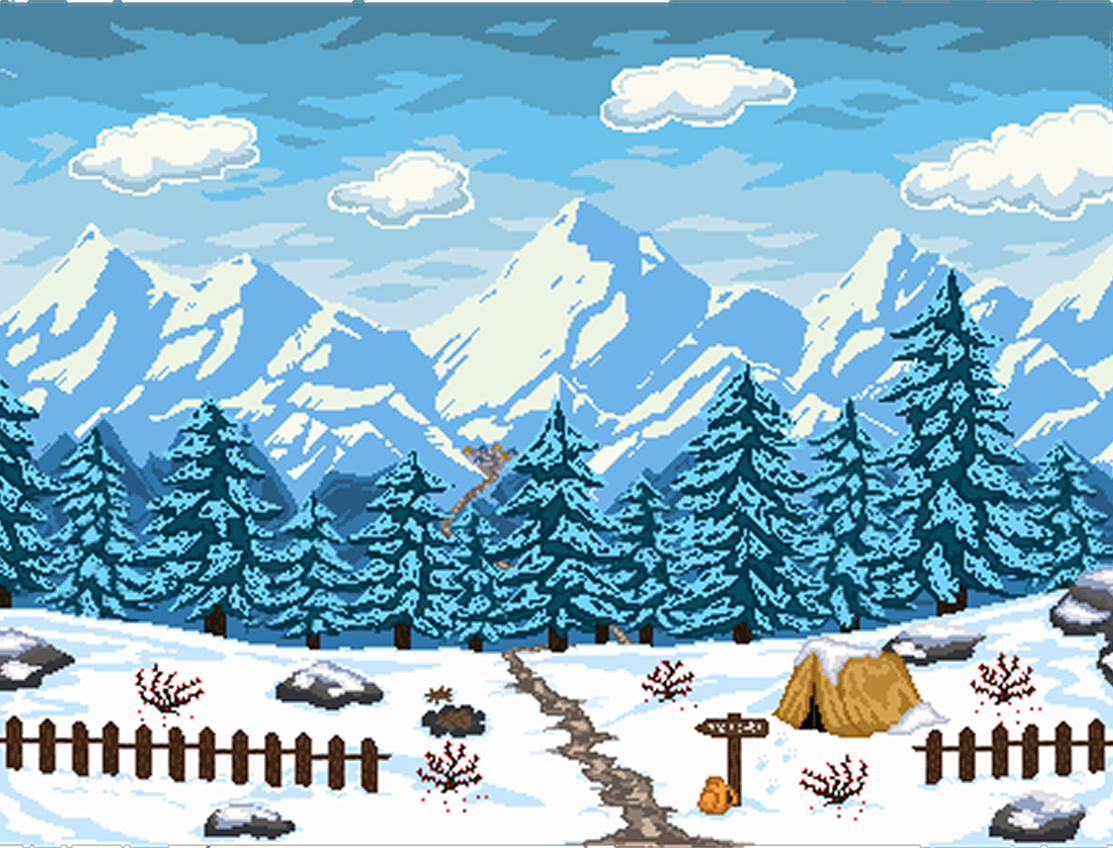
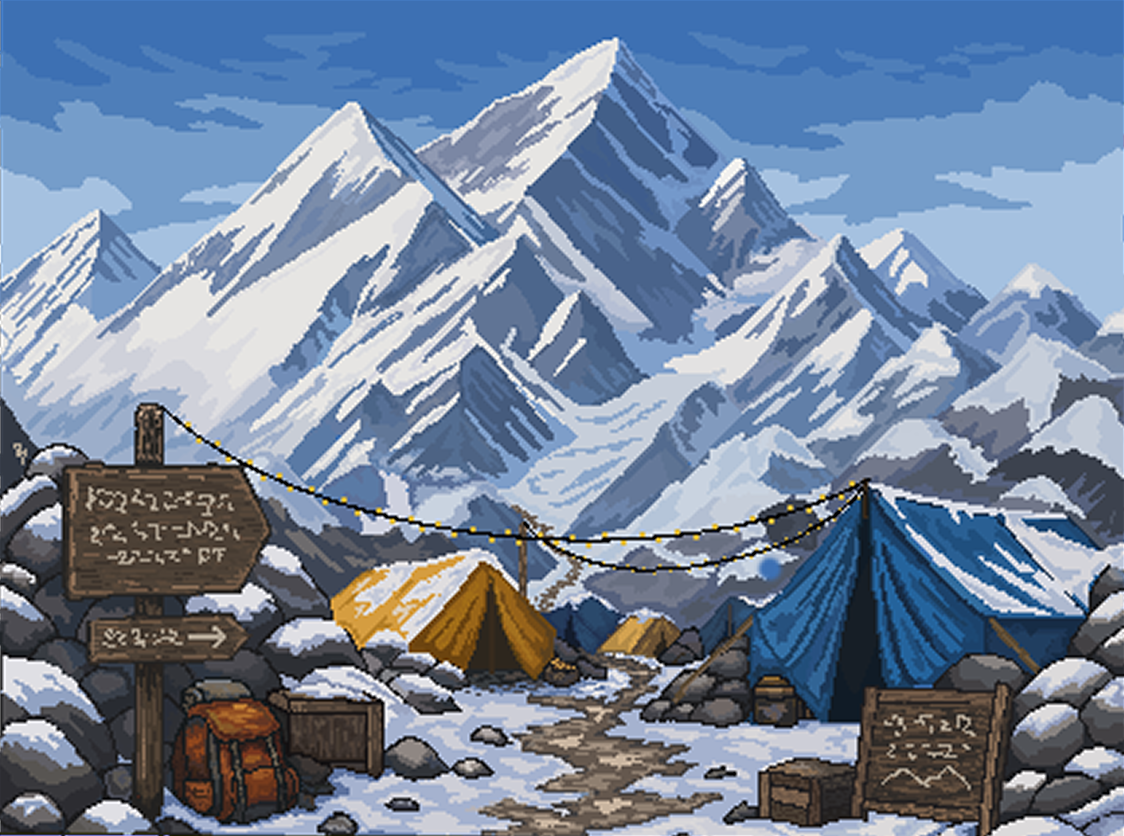
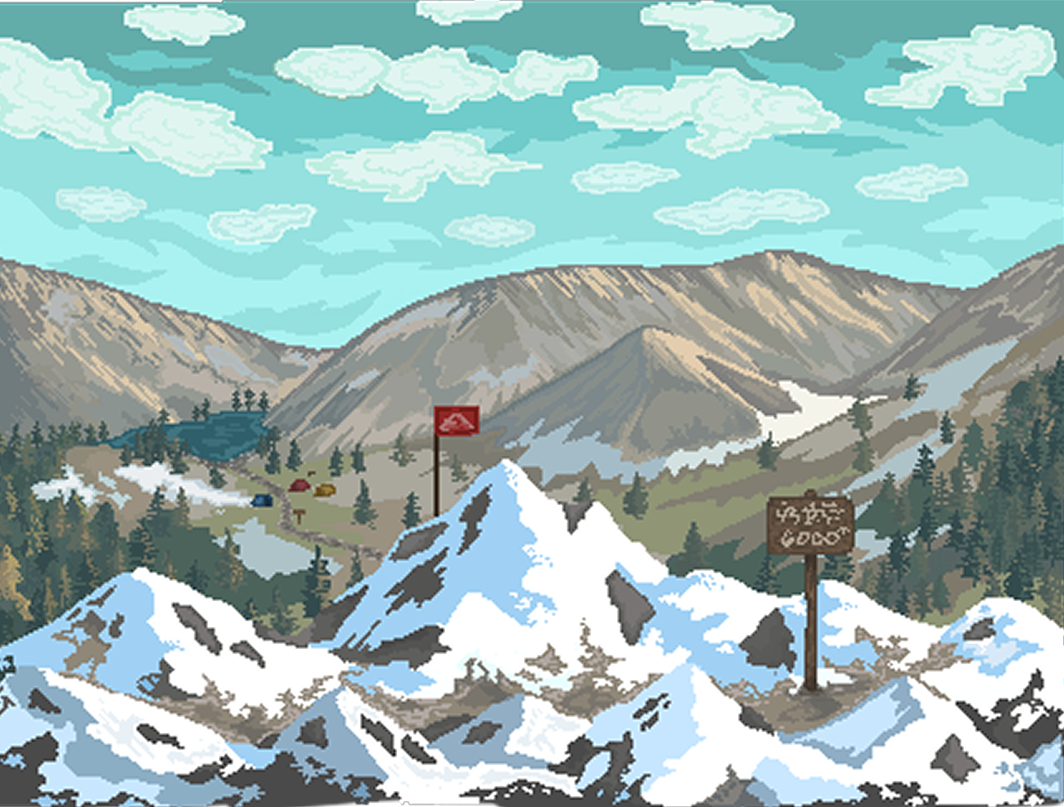
The game moves through seven distinct environments, each with its own pixel art background and emotional tone. The home screen opens inside a cozy tent that is safe and relatively barren. From there, the player moves outward into larger, more expansive scenes as the words grow more complex. Six are complete; the Forest Floor is still in progress.
The environment progression was sketched out early in the process with rough drawings and rough colored drawings to nail down the emotional arc and visual variety before committing to any pixel art. These sketches aren't for all environments, just the early ones used to establish tone and spatial direction. Please note that final environments are still in draft format and need to be cleaned up.
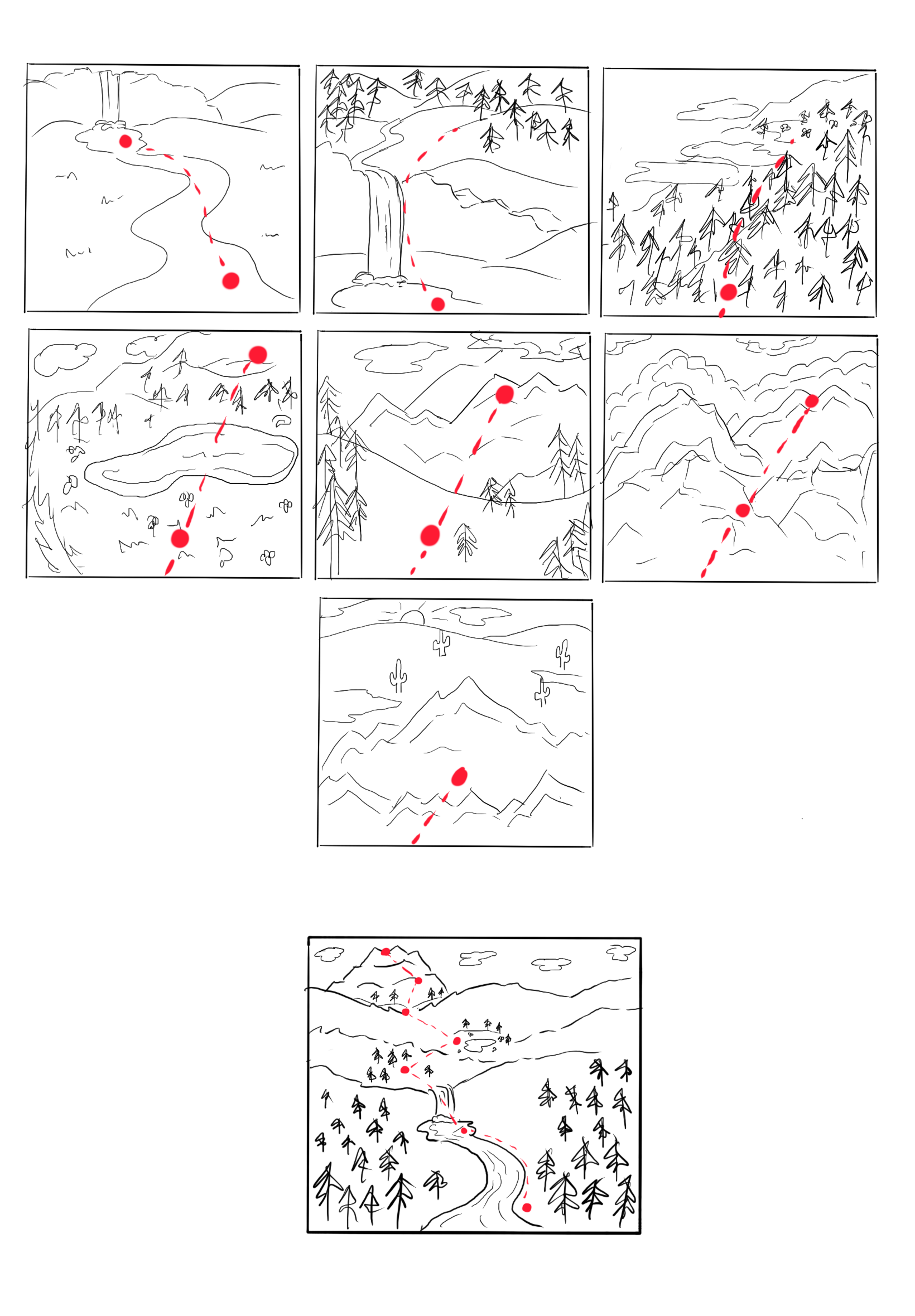
Early environment progression -> early iteration rough ideation sketches
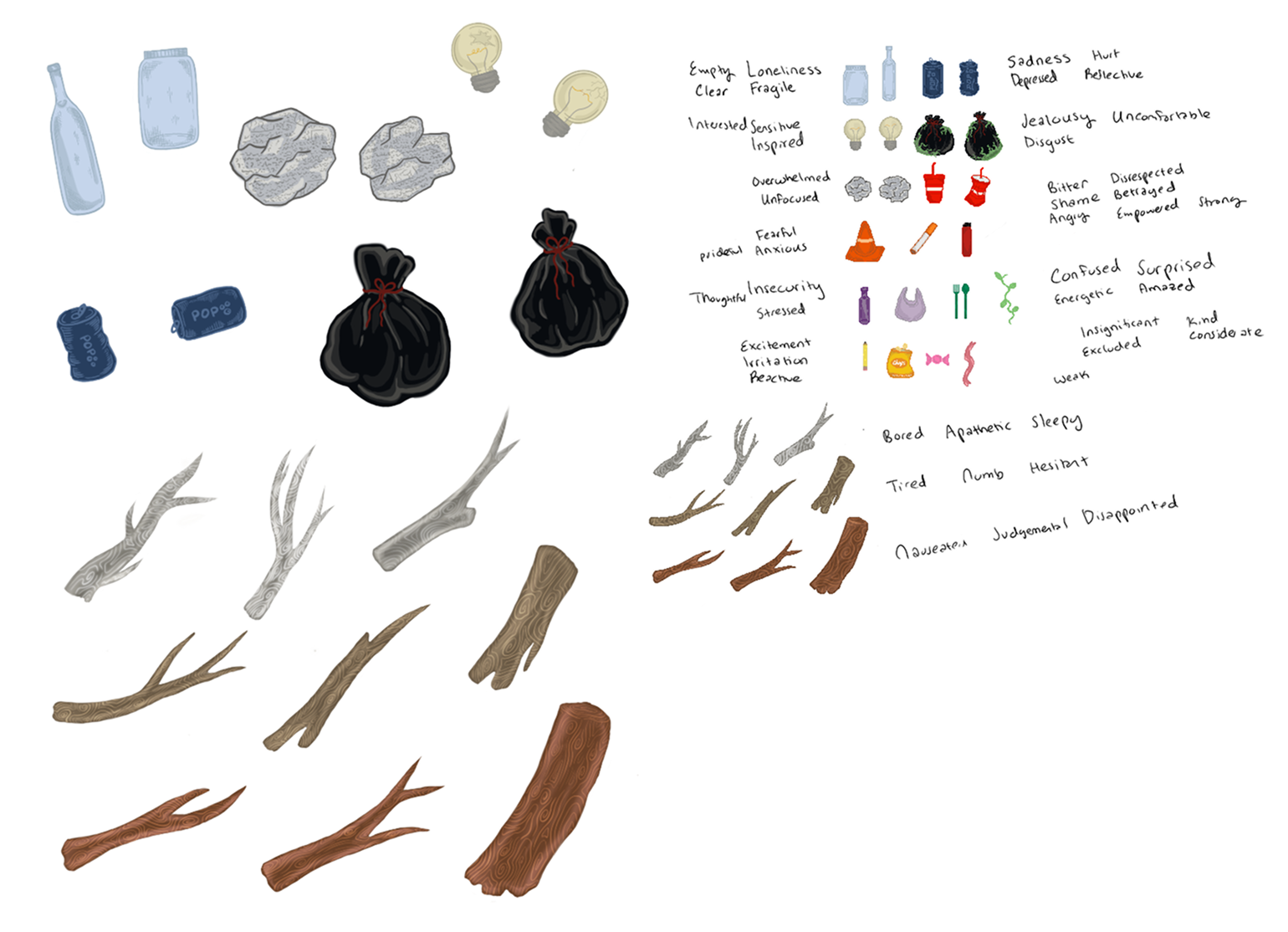
Environment / prop work -> early stage but deprecated
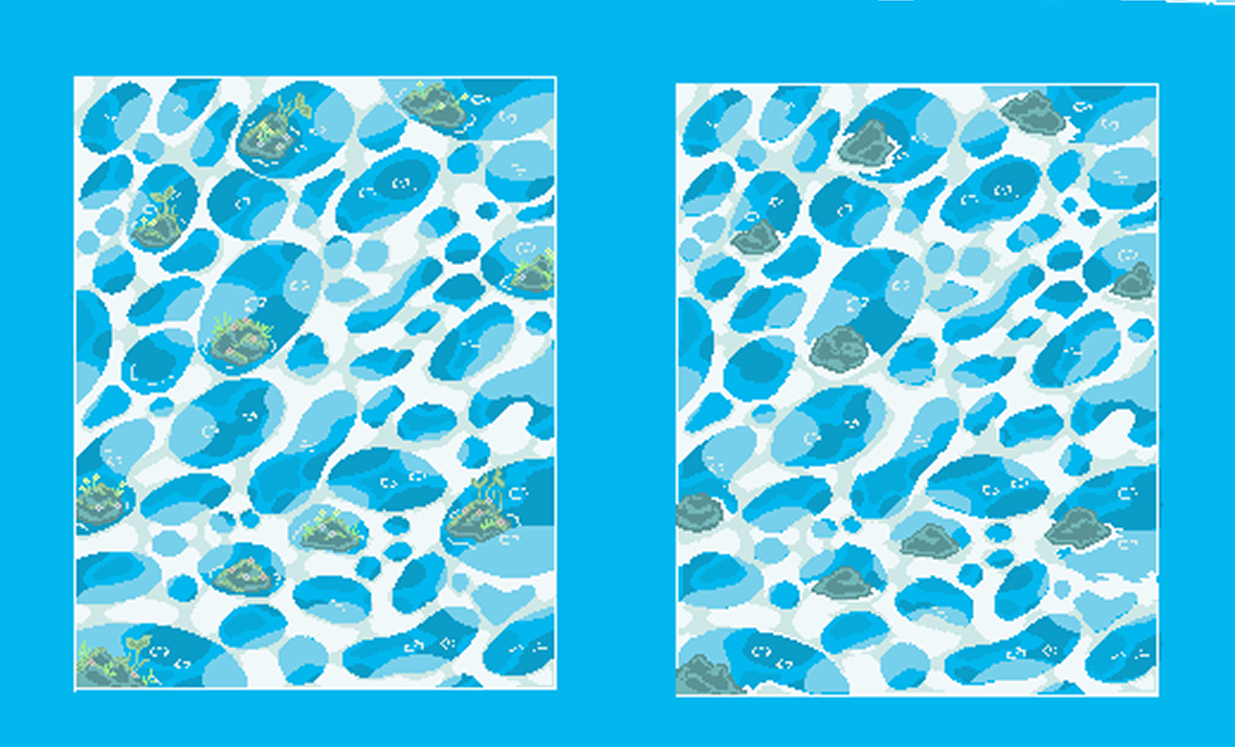
Background exploration (original stream background, depreecated)
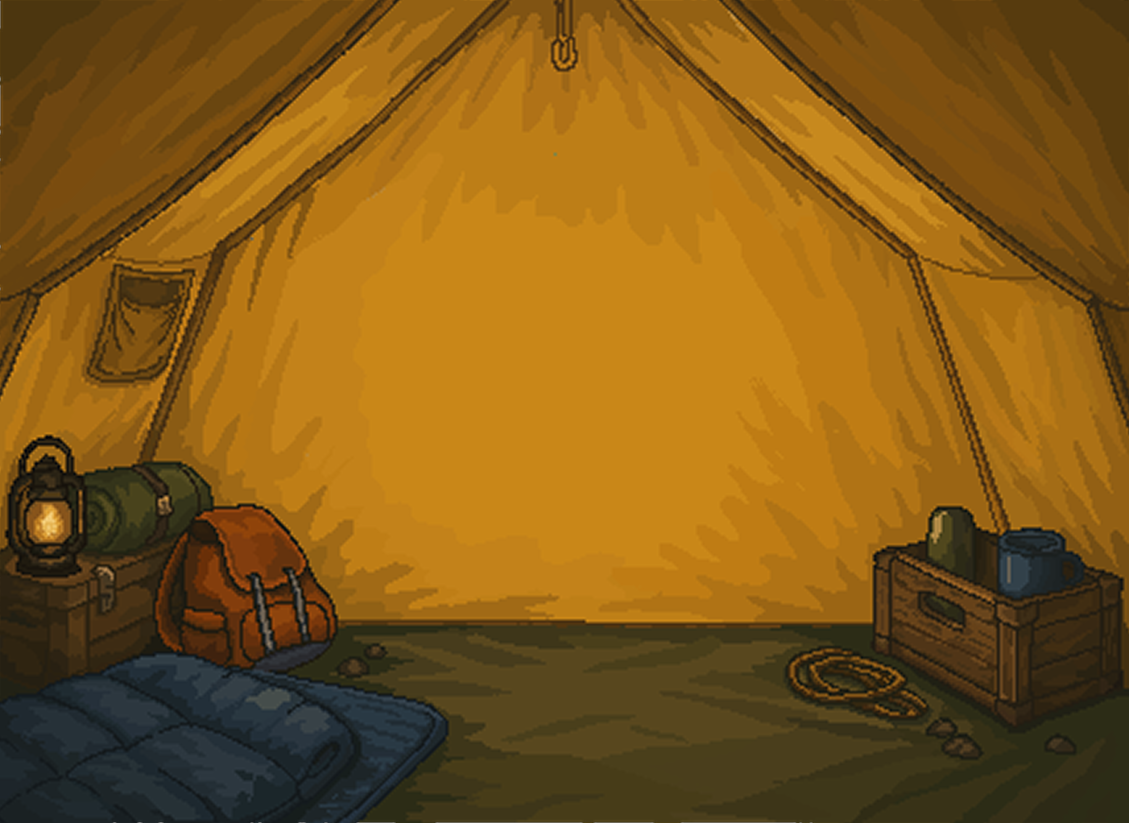
Home screen -> inside the tent
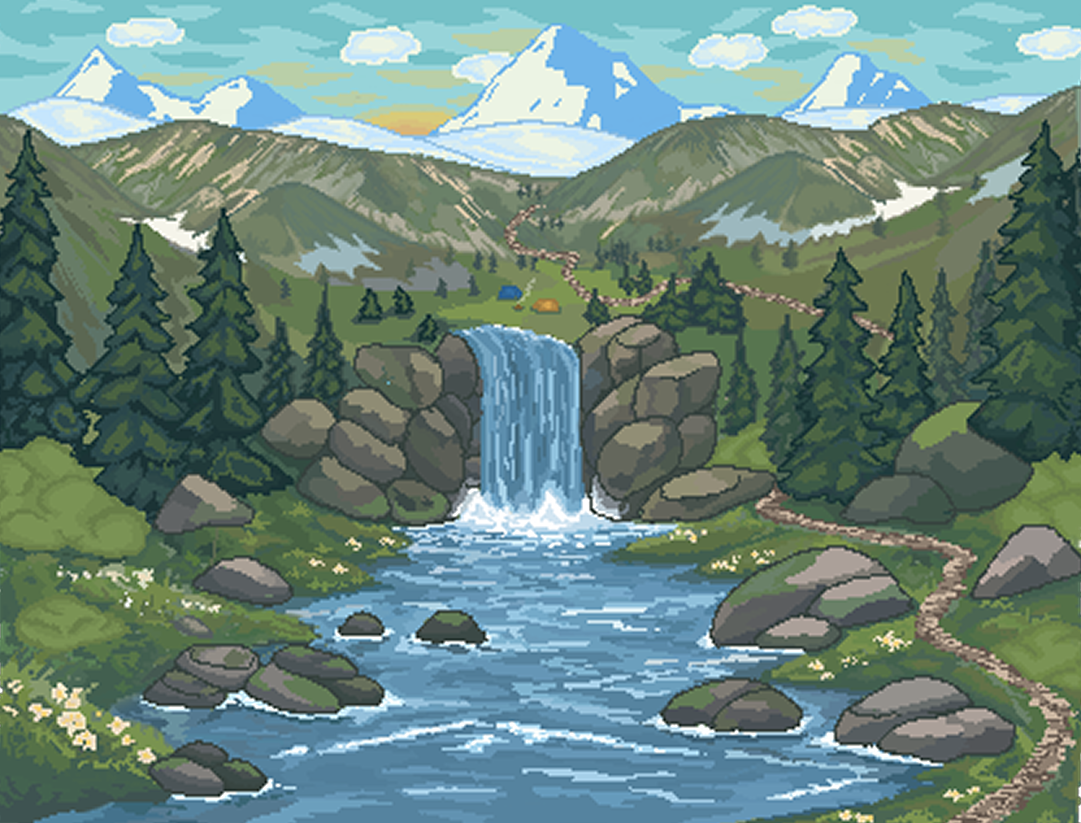
Each text also has custom UI underlays, backgrounds for falling text and button states that are designed after the backgrounds were finalized so text legibility stays consistent across different sky and ground colors.
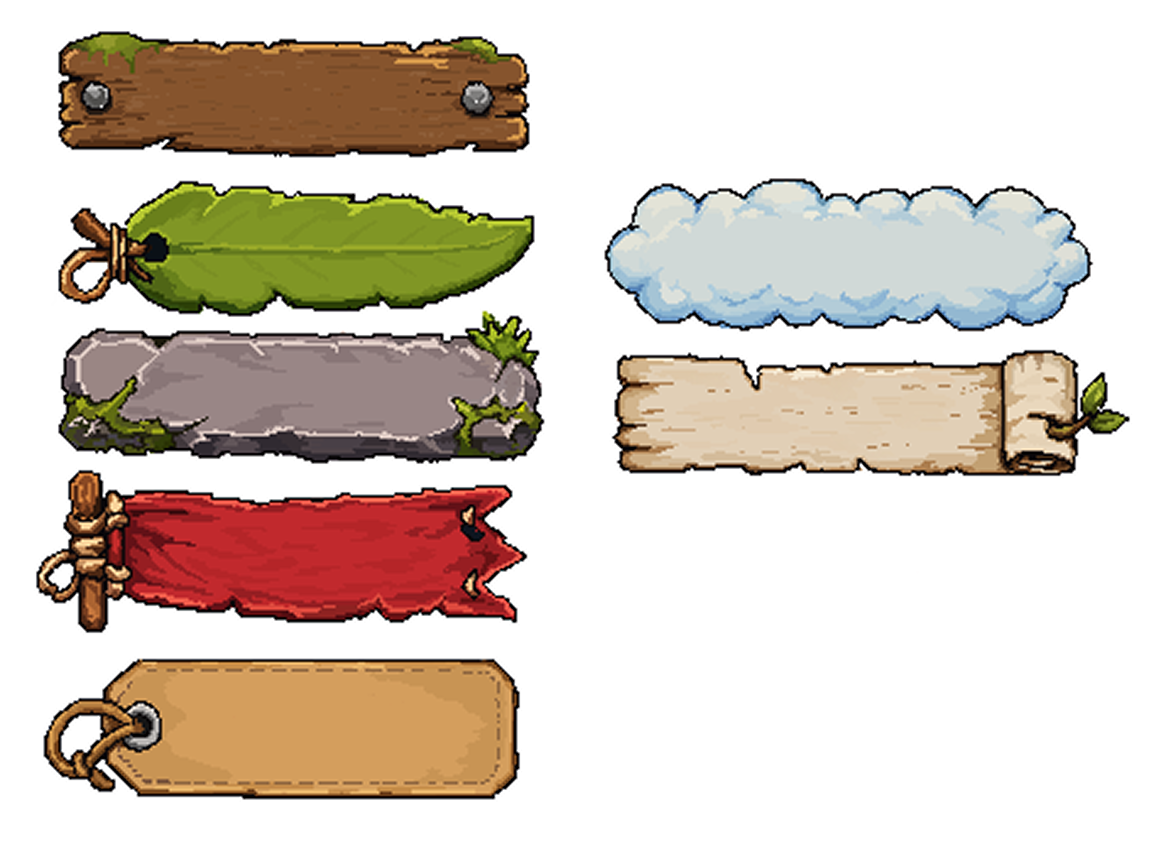
UI button and overlay work
Small animated characters
Each environment has a small animated pixel character that lives in the scene with idle animations and reactions to correctly typed words. This will help make the world feel alive without distracting from the typing. Character work is the most recent phase, and images will be added here once they're complete.
✦ Character sprite images coming soon! I will update this section when complete.
How the mechanic evolved
Several decisions shifted significantly during development, both in terms of the interaction design and the technology stack.